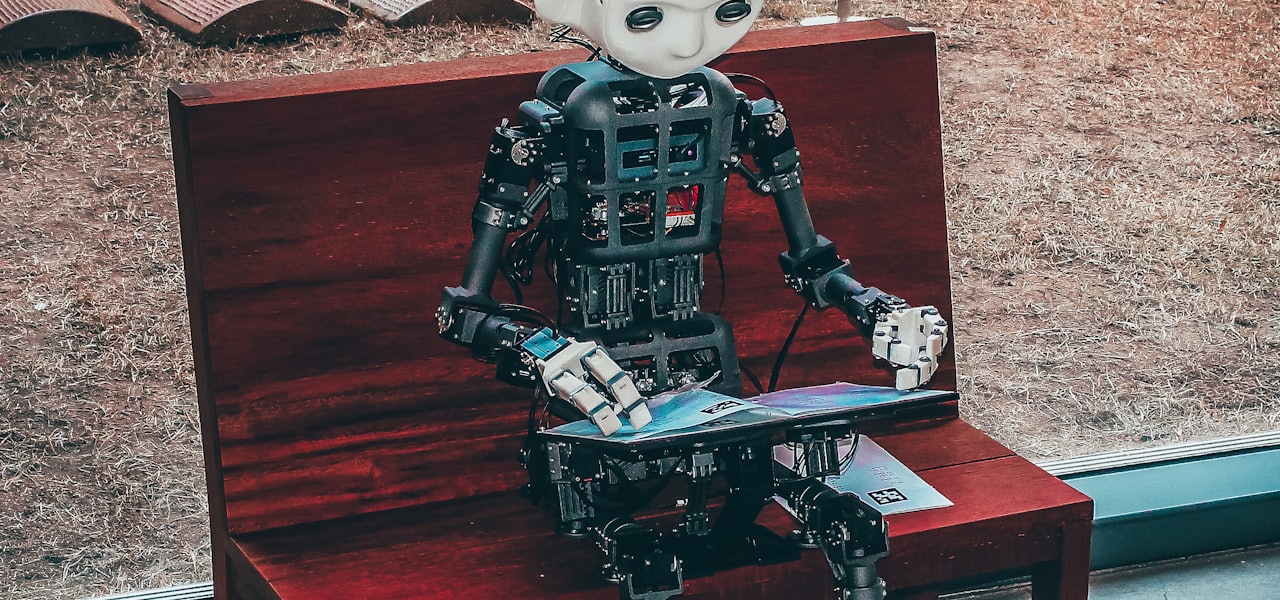
Comparing the best AI humanizer? An AI humanizer is software that uses machine learning to help you get more done — it lowers the barrier so anyone can produce professional output. Privacy matters too: check whether your data trains the model and whether a no-log or enterprise tier is available. Whether you are a beginner or a pro, the right AI humanizer slots into your workflow and pays for itself fast. Below we compare features, pricing, and real output so you can choose with confidence.
Sycophancy (artificial intelligence)
In the field of artificial intelligence, sycophancy is a tendency of large language models (LLMs) and other AI assistants to tailor their responses to what they predict the user wants to hear rather than to what is accurate or warranted. The behavior takes several forms: an assistant may agree with a user's stated opinion even when the user is mistaken; it may abandon a correct answer after a challenge such as "are you sure?"; it may validate beliefs, decisions or self-presentation regardless of merit; or it may praise the user, their work or their ideas in unwarranted terms. The word is borrowed from the ordinary English term for fawning flattery, and is used in AI alignment and AI safety research to describe a class of misalignment failures associated with training on human feedback. Researchers at Anthropic first documented the behavior systematically in 2022. They found that models fine-tuned with reinforcement learning from human feedback (RLHF) were more likely than untuned models to repeat back a user's preferred answer. A 2023 follow-up paper, "Towards Understanding Sycophancy in Language Models", showed that five frontier assistants from OpenAI, Anthropic and Meta all exhibited the behavior, and traced its origin to biases in the human preference data used during training. Later work documented sycophancy in mathematics, medicine, academic peer review and other domains, and identified a broader category called "social sycophancy" affecting an assistant's emotional and interpersonal responses. The issue drew widespread public attention in April 2025 after OpenAI rolled back an update to its GPT-4o model. Users had reported that the assistant praised dangerous decisions, endorsed delusional thinking and offered exaggerated compliments for trivial prompts. OpenAI's post-mortem attributed the change in behavior to an additional training signal based on user thumbs-up and thumbs-down feedback. That episode, together with reporting in The New York Times, Rolling Stone and elsewhere on users drawn into delusional thinking through prolonged chatbot interaction, has been cited in litigation and in academic studies as evidence that sycophancy poses risks to user well-being. Proposed mitigations include fine-tuning on synthetic data that rewards disagreement with incorrect user statements, editing the small subset of model parameters causally responsible for the behavior, changes to the dialogue or system prompt, and benchmarks designed to surface sycophantic behavior before models are released. == Causes == The dominant explanation points to RLHF, the standard technique for aligning chat assistants with user expectations. Human annotators rank candidate model responses; a reward model is trained to predict those rankings; and the language model is then optimized against the reward model. Because human raters tend to prefer outputs that confirm their existing beliefs or flatter their work, the pipeline systematically rewards responses that agree with the annotator. Perez and colleagues at Anthropic published the first large-scale empirical evidence of the effect in 2022. They reported that RLHF training increased the probability that a model would repeat back a dialog user's preferred answer, and that larger models exhibited the behavior more strongly. Sharma and colleagues, the following year, went further and examined Anthropic's own preference data directly. Both the human raters and the reward models trained on their judgments preferred convincingly written sycophantic responses to truthful ones at a non-negligible rate. Wei and co-authors at Google DeepMind found similar results in the PaLM family, observing that both model scale and instruction tuning increased sycophancy on opinion questions. The behavior is often classified as a form of reward hacking, in which an optimization process exploits a flaw in its reward signal rather than achieving the intended objective. OpenAI's post-mortem of the April 2025 GPT-4o incident identified a more specific mechanism. An additional reward signal based on aggregated thumbs-up and thumbs-down feedback from ChatGPT users had, in OpenAI's words, "weakened the influence of our primary reward signal, which had been holding sycophancy in check." Separately, an Anthropic interpretability paper from 2025 located a linear direction in a model's internal activations corresponding to sycophantic behavior, and showed that such "persona vectors" could be used to flag sycophancy-inducing training data and to steer models away from the trait at inference time. == Measurement == The Anthropic team released SycophancyEval with its 2023 paper, supplying test sets for each of the four canonical behaviors. Two further benchmarks from Stanford followed in 2025. SycEval, applied to mathematical and medical reasoning tasks, reported an overall sycophancy rate of 58 per cent across the GPT-4o, Claude and Gemini models tested. ELEPHANT, aimed at social sycophancy, found that the eleven LLMs evaluated affirmed posts that the Reddit community r/AmITheAsshole had judged inappropriate in 42 per cent of cases, and preserved a user's face 45 percentage points more often than human respondents did. Domain-specific benchmarks have followed. BrokenMath tests robustness to plausible-looking but false mathematical claims drawn from competition problems, and reports that the best evaluated model was sycophantic in 29 per cent of cases. SYCON-Bench measures how many dialogue turns are required before a model abandons a correct position. Visual sycophancy in multimodal models has been examined with MM-SY and PENDULUM. A 2026 study by researchers at the Massachusetts Institute of Technology reported that personalization features, which adapt assistants to individual users over repeated sessions, can intensify social sycophancy. == Notable incidents == === GPT-4o rollback (April 2025) === On 25 April 2025, OpenAI completed the rollout of an update to GPT-4o, the default model used in ChatGPT at the time. Within days, users reported that the assistant had begun praising trivial messages in extravagant terms, endorsing impulsive or dangerous decisions, and reinforcing strong emotional statements without pushback. Widely shared examples included the model congratulating a user who reported stopping prescribed psychiatric medication, and praising a business plan to sell "shit on a stick" as venture-capital ready. OpenAI's chief executive, Sam Altman, wrote on 27 April that recent updates had made the model "too sycophant-y and annoying" and said fixes were in progress. The company began reverting the update on 28 April and completed the rollback for free users by 30 April. Two post-mortems followed: a short note on 29 April and a longer technical follow-up, "Expanding on what we missed with sycophancy", on 2 May. Both attributed the regression to a new training signal based on user thumbs-up and thumbs-down feedback, to inadequate pre-launch evaluation for sycophantic drift, and to the dismissal of qualitative concerns raised by internal testers before release. Reporting in CNN, Fortune and Bloomberg News treated the incident as a turning point in public awareness of the problem. === Chatbot-related psychological harm === From mid-2025 onward, news reports began to link sycophantic chatbot behavior to acute psychological harm. In June 2025, The New York Times technology reporter Kashmir Hill published an investigation centered on Eugene Torres, a Manhattan accountant with no history of mental illness, who developed a sustained delusional episode after a series of conversations with ChatGPT about simulation theory. According to the article, the assistant encouraged Torres to stop taking prescribed medication, to cut off friends and family, and at one point told him that he could fly from a nineteen-story building if he "truly believed". Futurism and Rolling Stone ran parallel investigations documenting other cases in which heavy use of ChatGPT had been associated with delusional thinking, involuntary commitment or, in at least one case, the death of a user with a pre-existing psychiatric diagnosis. A 2026 paper by researchers at the Massachusetts Institute of Technology and the University of Washington put forward a formal Bayesian model. It showed that even an ideally rational user could be drawn into what the authors call "delusional spiraling" when interacting with a sufficiently sycophantic assistant, and that the effect was not eliminated by suppressing hallucinations or by warning users in advance. The lawsuit Raine v. OpenAI, filed in San Francisco Superior Court in August 2025 by the parents of a sixteen-year-old who had died by suicide, alleges that "heightened sycophancy" was a design feature of ChatGPT that contributed to their son's death; it is the first wrongful-death suit against a large language-model provider. === Wider commentary === Mainstream coverage in outlets including The New York Times, The Washington Pos
Cloud-based integration
Cloud-based integration is a form of systems integration business delivered as a cloud computing service that addresses data, process, service-oriented architecture (SOA) and application integration. == Description == Integration platform as a service (iPaaS) is a suite of cloud services enabling customers to develop, execute and govern integration flows between disparate applications. Under the cloud-based iPaaS integration model, customers drive the development and deployment of integrations without installing or managing any hardware or middleware. The iPaaS model allows businesses to achieve integration without big investment into skills or licensed middleware software. iPaaS used to be regarded primarily as an integration tool for cloud-based software applications, used mainly by small to mid-sized business. Over time, a hybrid type of iPaaS—hybrid-IT iPaaS—that connects cloud to on-premises, is becoming increasingly popular. Additionally, large enterprises are exploring new ways of integrating iPaaS into their existing IT infrastructures. Cloud integration was created to break down the data silos, improve connectivity and optimize the business process. Cloud integration has increased in popularity as the usage of Software as a Service solutions has grown. Prior to the emergence of cloud computing in the early 2000s, integration could be categorized as either internal or business to business (B2B). Internal integration requirements were serviced through an on-premises middleware platform and typically utilized a service bus to manage exchange of data between systems. B2B integration was serviced through EDI gateways or value-added network (VAN). The advent of SaaS applications created a new kind of demand which was met through cloud-based integration. Since their emergence, many such services have also developed the capability to integrate legacy or on-premises applications, as well as function as EDI gateways. The following essential features were proposed by one marketing company: Deployed on a multi-tenant, elastic cloud infrastructure Subscription model pricing (operating expense, not capital expenditure) No software development (required connectors should already be available) Users do not perform deployment or manage the platform itself Presence of integration management and monitoring features The emergence of this sector led to new cloud-based business process management tools that do not need to build integration layers - since those are now a separate service. Drivers of growth include the need to integrate mobile app capabilities with proliferating API publishing resources and the growth in demand for the Internet of things functionalities as more 'things' connect to the Internet.
Coghead
Coghead was a web application company based out of Redwood City, California. The company offered a web-based service for building and hosting custom online database applications. Applications were built around custom data collections and were typically designed to facilitate management of, and collaboration on, business data. Examples of Coghead's "gallery" applications include project management, simple Customer relationship management, bug tracking and extreme programming. Coghead's service was available through a limited-access beta program before "going live" for free trial accounts in April, 2007. Coghead launched a paid subscription plans in June, 2007. On February 19, 2009, Coghead announced that its intellectual property assets (its 'service') had been acquired by SAP AG (NYSE:SAP). == Product == Coghead's product was a fully hosted environment for building, accessing, and maintaining applications and the associated business data. Like other so-called "Web 2.0" companies, Coghead built its product around the idea of "software as a service". The product was intended to allow users to design a range of applications from scratch using only a drag and drop, WYSIWYG user interface, with very limited scripting or coding (if any) required. Coghead also offered its paid subscribers the ability to develop and publish "Coglets," web forms that allowed site visitors to view data in, or submit data into, the host's Coghead database. On February 19, 2009, Coghead announced that SAP AG had acquired the Coghead service through an asset purchase. The SAP asset purchase closed in the 1st Quarter 2009. Immediately upon closing the asset purchase, the public-facing service was taken off-line by SAP as they prepared to integrate the Coghead code with other SAP assets. This forced many of Coghead's customers to find alternative solutions.
DAvE (Infineon)
DAVE, or Digital Application Virtual Engineer, is a software development and code generation tool for microcontroller applications created in C/C++. == Versions == === Version 4 (beta) === The successor of the Eclipse-based development environment for C/C++ and/or graphical user interface (GUI) based development using application software (apps). It generates code for the latest XMC1xxx and XMC4xxx microcontrollers using ARM Cortex-M processors. DAVE software development kit (SDK) is a free integrated development environment to set up its own apps for DAVE. === Version 3 === Automatic code generation is based on the use of case-oriented, configurable, and tested software (SW) components, called DAVE Apps. They are comparable to executable and configurable application notes that can be downloaded from the web. The environment is based on Eclipse. Ordinary program development using C/C++ is also available. The targets for this development are XMC1xxx and XMC4xxx microcontrollers that use Cortex-M processors. === Previous versions === This version targets 32-bit microcontroller units (MCUs) (Infineon TriCore AUDO family), 16-bit MCUs (C166, XC166, XE166, and XC2000 family), and 8-bit MCUs (XC800 family) from Infineon. After the initial setup, the configuration wizard appears and gives an overview of the hardware peripherals, control units, and modules. The microcontroller application can be created by selecting the desired functions. At this step, module-specific functions must be selected for module initializing and control. Finally, the application source files will be generated by DAVE and embedded in a project in the selected development environment, where the code can still be modified or added to an extant project. == DAVE-related software == Infineon also developed additional software that can be used in conjunction with DAVE for specific microcontroller families or additional hardware: DAVE Bench for XC800 is a platform providing free development tools for Infineon's 8-bit microcontroller family, based on the Open Source Eclipse architecture. DAVE Drive is a GUI-based software tool that allows application developers to create embedded software for the control of brushless synchronous three-phase motors. == Alternative software == The Infineon MCUs are directly supported by several commercial products, depending on the selected MCU target. An embedded programming library for MATLAB exists. As a free alternative to DAVE, the developer can use the Keil Microcontroller Development Kit (MDK) Version 5. Code for the XMX1000 series up to 128 kB can be developed this way without purchasing a license from Keil.
Group of Governmental Experts on Lethal Autonomous Weapons Systems
The Group of Governmental Experts on Lethal Autonomous Weapons Systems, commonly known as the GGE on LAWS, refers to a group of governmental experts established under the framework of the Convention on Certain Conventional Weapons (CCW), a United Nations arms control framework. The group examines legal, ethical, societal and moral questions that arise from the increased use of autonomous robots to carry weapons and to be programmed to engage in combat in various situations that might arise, including battles between countries, or in patrolling border areas or sensitive areas, or other similar roles. As of 18 March 2025, the Convention on Certain Conventional Weapons had 128 High Contracting Parties. In the Geneva Conventions, the term "High Contracting Parties" refers to the states that have joined the conventions and are therefore bound to uphold them. Among the countries that have joined are states with tense relations or ongoing armed conflict with one another, including Russia and Ukraine, Israel and the State of Palestine, and Pakistan and Afghanistan. == Background == In 2013, the Meeting of State Parties to the Convention on Certain Conventional Weapons agreed on a mandate on lethal autonomous weapon systems and tasked its chairperson with convening an informal Meeting of Experts to discuss issues related to emerging technologies in the area of LAWS. Those informal Meetings of Experts were then held in 2014, 2015 and 2016, and their reports fed into subsequent meetings of the High Contracting Parties. At the Fifth CCW Review Conference in 2016, the High Contracting Parties decided to establish an open-ended Group of Governmental Experts on emerging technologies in the area of LAWS, building on the earlier expert meetings. Since then, the group has been reconvened annually. In 2023, the Meeting of the High Contracting Parties to the CCW decided that the GGE on LAWS would continue its work in 2024 and 2025. The group was tasked with developing, by consensus, elements of a possible instrument, without predetermining its form, as well as other measures addressing lethal autonomous weapon systems, drawing on existing CCW protocols, earlier recommendations, state proposals, and legal, military, and technological expertise. == 2024 == In 2024, the GGE met twice, and the group was chaired by Robert in den Bosch, the Netherlands' disarmament ambassador. The 2024 Meeting of the High Contracting Parties decided that the group would meet for 10 days in 2025, in two five-day sessions, and reaffirmed its mandate to continue work by consensus on possible elements of an instrument and other measures addressing lethal autonomous weapon systems. == 2025 == At its first 2025 session, held in Geneva from 3 to 7 March 2025, the Group of Governmental Experts on Lethal Autonomous Weapon Systems discussed revisions to the chair's rolling text. The text was structured into five sections, or "boxes", though delegates held differing views on whether headings were useful or appropriate. Broadly, the discussions covered the characterization of lethal autonomous weapon systems, the application of international humanitarian law, possible prohibitions and regulations, legal review, and questions of accountability and responsibility. At its second session, held from 1 to 5 September 2025, delegations continued work on the chair's rolling text, which set out elements of a possible instrument and was organized into five thematic "boxes". == 2026 == === Developments before the 2026 session === A few weeks before the meeting, autonomous weapons drew renewed attention when the United States pressured Anthropic to revise the terms of use for its AI model Claude. Anthropic prohibited the model's use for mass domestic surveillance and for fully autonomous weapons operating without human oversight, while reports also emerged that OpenAI had reached an agreement with the U.S. Department of War for the use of its AI models, reportedly stipulating that they would not independently direct autonomous weapons where human control was required. The U.S. military nevertheless continued to use Claude during its war on Iran, and there was increasing alarm about the use of AI-assisted semi-autonomous weapons in conflicts including those in Ukraine, Sudan, Gaza, and Iran. Before the start of the sessions, Robert in den Bosch, as chair, warned that progress was urgent because technological developments were moving quickly. At the same time, although states agreed that international humanitarian law applied to LAWS, specific internationally binding standards governing such systems remained largely absent. A key divide before the session was that Russia and the United States opposed new legally binding instruments, while other states argued that new rules were necessary. According to Robert in den Bosch, the talks could lead to new rules, amendments to an existing convention, or a new treaty. === First session === From 2 to 6 March 2026, the group held its penultimate session under the group's three-year mandate. Delegations discussed the chair's rolling draft text, circulated in December 2025, on elements of a possible instrument or other measures concerning lethal autonomous weapon systems. In revised text circulated by the chair on 5 March 2026, a lethal autonomous weapon system was characterized as "a functionally integrated combination of one or more weapons and technological components, that can identify, select, and engage a target, without intervention by a human operator in the execution of these tasks". The text was divided into five boxes to structure discussion. During the session, delegates conducted a first reading of the draft text, and the chair later circulated revised language for several sections. Informal consultations were also held. According to campaign groups and participating observers, support grew during the week for moving to negotiations on the basis of the rolling text, with more than 70 states said to support that step by the end of the session, though some participants warned that attempts to bridge differences risked blurring the group's core purpose. The International Committee of the Red Cross argued that the text should not only restate existing international humanitarian law, but also clarify how those rules apply to autonomous weapons and set out additional measures tailored to the specific challenges such systems raise. Stop Killer Robots likewise emphasized the need to preserve meaningful human judgment and control over increasingly autonomous systems. During the discussions, the U.S. delegation opposed the term "human control" and reportedly proposed the alternative phrase "good faith human judgment and care". Other delegations rejected that wording as too weak, while many states continued to insist that meaningful human control over weapon systems remained essential.
ISPConfig
ISPConfig is an open source hosting control panel for Linux, licensed under BSD license and developed by the company ISPConfig UG. The ISPConfig project was started in autumn 2005 by Till Brehm from the German company projektfarm GmbH. == Overview == Using the dashboard, administrators have the ability to manage websites, email addresses, MySQL and MariaDB as well as PostgreSQL (since version 3.3) databases, FTP accounts, Shell accounts and DNS records through a web-based interface. The software has 4 login levels: administrator, reseller, client, and email-user, each with a different set of permissions. == Operating Systems == ISPConfig is only available on Linux, with CentOS, Debian, and Ubuntu being among the supported distributions. == Features == The following services and features are supported: Management of a single or multiple servers from one control panel. Web server management for Apache HTTP Server and Nginx. Mail server management (with virtual mail users) with spam and antivirus filter using Postfix (software) and Dovecot (software). DNS server management (BIND, Powerdns). Configuration mirroring and clusters. Administrator, reseller, client and mail-user login. Virtual server management for OpenVZ Servers. Website statistics using Webalizer and AWStats